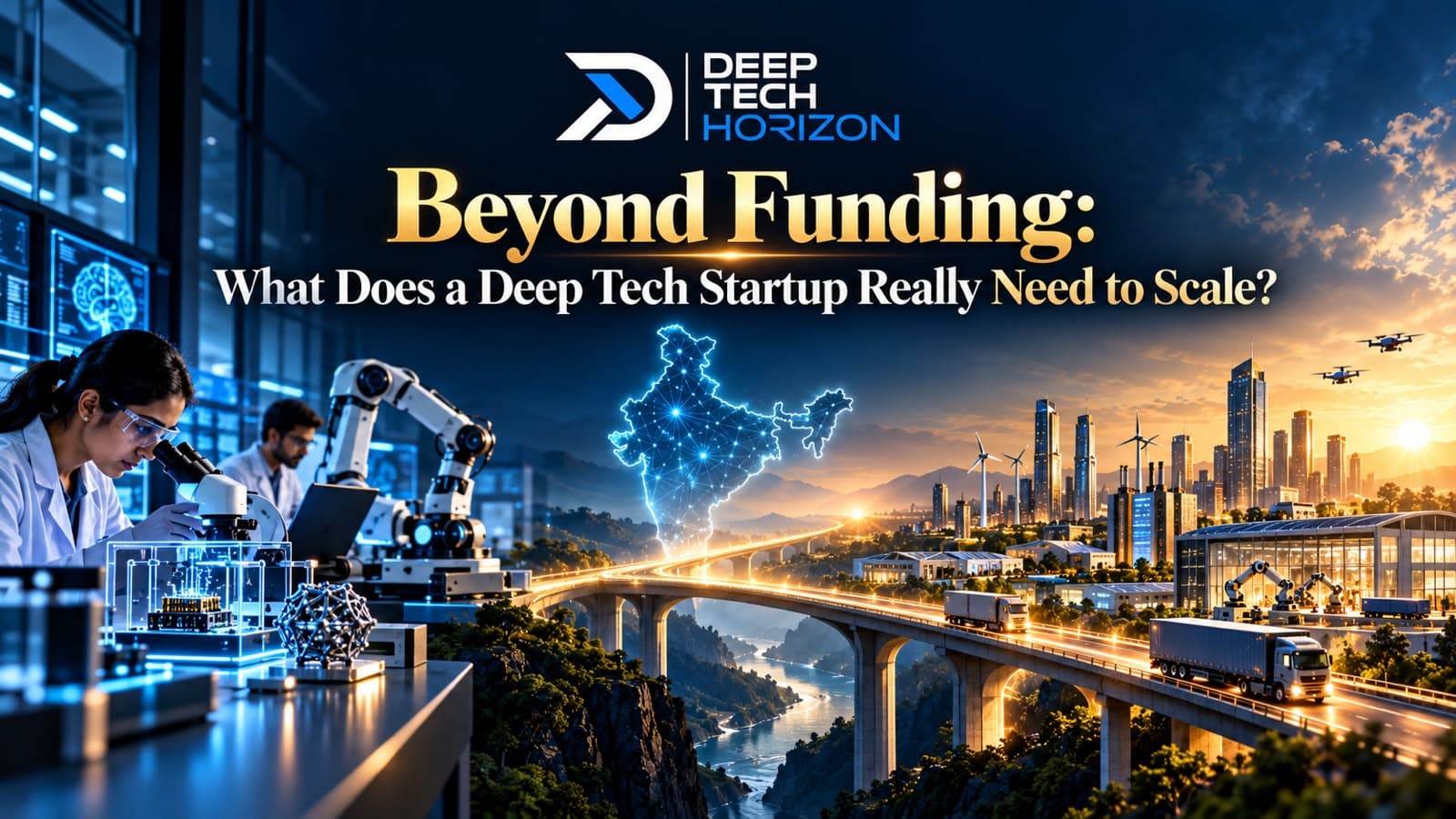

India's deep-tech story is gaining momentum. Across laboratories, universities, research institutions, startups and industrial R&D teams, ideas are emerging in artificial intelligence, robotics, biotechnology, space, advanced materials, semiconductors, clean energy and defence. Technical ambition is no longer the question. India has researchers who can solve difficult problems, engineers who can build sophisticated systems and founders willing to pursue long development cycles. The question is what happens after the breakthrough.
A technology that performs in a laboratory is not yet a product that customers can adopt. A patent protects an invention, but does not establish its demand. A promising demonstration may attract attention without proving that the solution can be manufactured, deployed, serviced and purchased at scale. If India wants deep technology to shape industries and strengthen its economic position, the pathway from knowledge to market must become as deliberate as the effort invested in discovery.
The distance between invention and adoption
Innovation is often celebrated at visible milestones: a publication, a prototype, an intellectual-property filing, an incubator award or an investment announcement. Those milestones matter, but they describe progress in creating technology, not necessarily progress in creating customer value. Commercialisation demands a different kind of evidence: that a real problem exists, that buyers are willing and able to act, and that the proposed solution is superior enough to justify change.
Consider a robotic inspection system that works impressively in a controlled environment. A commercial customer will ask whether it can operate reliably in heat, dust, water, vibration or unpredictable workflows; how it integrates with existing operations; what downtime costs; who maintains it; and how quickly its investment pays back. These are not secondary business questions. They determine whether the technology creates impact beyond the demonstration.
Funding is necessary. An ecosystem is essential.
Patient capital is especially important in deep tech because product development, qualification, clinical evidence, regulatory review and procurement may take years. Yet funding is only one piece of the challenge. A venture can be well financed and still be unable to access its first industrial testbed, understand certification expectations or secure a credible early customer.
Commercialisation also requires specialised talent: people who understand industrial procurement, product management, regulatory pathways, manufacturing quality, supply chains, after-sales service, business development and partnerships. These capabilities do not automatically emerge from a strong science or engineering team. They have to be designed into the venture as early as possible.
Equally important, industry cannot participate only as a buyer at the end of the process. Companies can help frame problems, offer environments for pilots, share operational constraints, validate economics and co-develop deployment-ready solutions. When industry engagement begins too late, founders risk perfecting a technology for a need that buyers do not consider urgent enough to fund.
Technology readiness is not market readiness
A deep-tech innovation moves through more than one kind of readiness. Technical readiness asks whether the science and engineering work. Product readiness asks whether the system performs consistently outside the lab. Regulatory and operational readiness address compliance, safety, reliability and integration. Market readiness asks who buys, why they buy, how decisions are made and whether the underlying economics support repeatable growth.
Different clusters face different barriers. A medical device may need clinical validation, regulatory clearance and clinician adoption. A semiconductor innovation may require expensive fabrication access and qualification cycles. An ocean technology solution must withstand demanding field conditions and limited maintenance windows. A defence or aerospace product may navigate stringent testing and extended procurement timelines. One generic startup playbook cannot address these realities.
The most useful shift is to ask commercial questions during research and prototyping rather than after product completion: Which industry problem are we solving? Who is the economic buyer? What evidence would persuade that buyer? Which certifications or integrations are essential? What does delivery at scale actually cost? Asking early does not diminish scientific curiosity. It gives promising science a more credible path into the world.
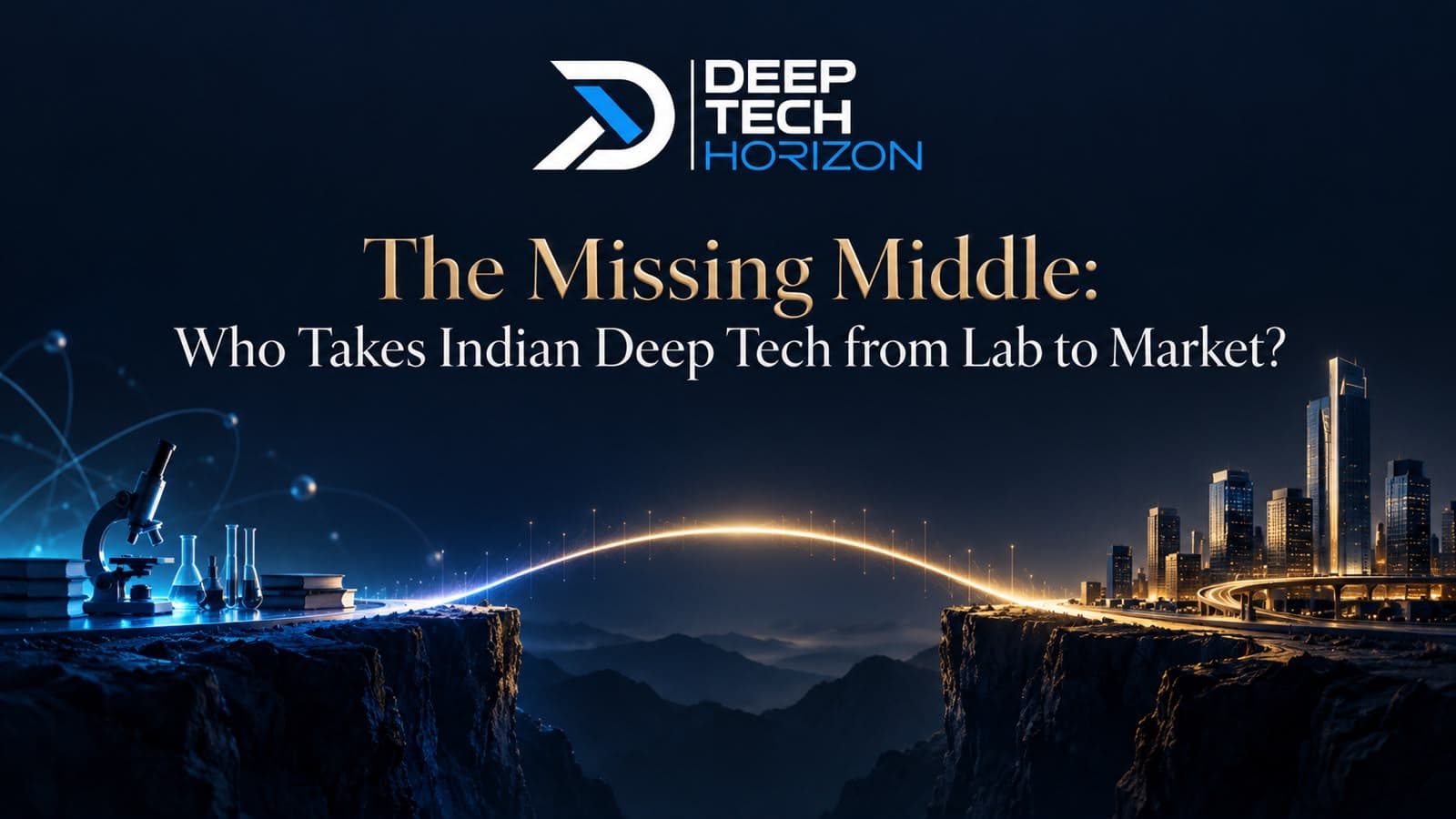
Why the 'missing middle' matters
The distance between a research outcome and a functioning company is often occupied by difficult, under-supported work: pilot production, field validation, design iteration, intellectual-property strategy, customer trials, first deployments and the transition from custom projects to repeatable offerings. This 'missing middle' can be particularly unforgiving because risk remains high even after technical feasibility is demonstrated.
Founders need access to translational infrastructure and industry partners, not simply more events or introductions. Universities and laboratories need pathways that reward technology transfer and collaborative development alongside academic output. Incubators and accelerators can go further by connecting ventures with sector-specific experts and real demand. Investors need milestones that reflect technical de-risking and market evidence, not only conventional short-cycle growth metrics.
What commercialisation-led execution looks like
A stronger approach begins with a problem of consequence rather than a technology in search of an application. It brings customers into the discovery process, defines measurable success criteria for pilots, and tests the economics alongside technical performance. It builds a practical roadmap for certification, manufacturing, service and distribution. And it develops commercial and leadership capability at the same pace as engineering.
Progress should then be assessed using a balanced set of indicators: technical milestones achieved, pilots completed, deployment performance, repeat customers, revenue quality, time to procurement, partnerships activated and measurable improvements delivered to the end user. Patent counts and prototype demonstrations remain useful indicators, but cannot be the only scorecard.
This is also where cross-cluster collaboration becomes powerful. Advances in AI can make marine systems more autonomous. Advanced materials can improve energy storage, medical devices and aerospace components. Robotics can influence agriculture, healthcare and manufacturing. The strongest commercial pathways may emerge when expertise, infrastructure and demand meet across traditional sector boundaries.
The next chapter for India
India has the opportunity not merely to contribute talent to global technology development, but to own, commercialise and deploy more technologies that solve substantial problems. Realising that ambition will demand stronger bridges among research institutions, founders, corporates, investors, policy stakeholders and experienced execution leaders.
At Deep Tech Horizon, our belief is simple: innovation deserves an ecosystem that helps it travel. Knowledge must connect with problems. Founders must connect with customers and mentors. Research must connect with validation infrastructure. Capital must connect with patient execution. And collaboration must produce outcomes rather than stop at conversation.
India's deep-tech future will not be measured only by what we discover, patent or demonstrate. It will be measured by technologies adopted, enterprises sustained, industries transformed and meaningful value created.
The question is no longer whether India can innovate. The question is whether we can commercialise enough of that innovation to create lasting impact.